

“Our capacity to hunt, seek healing and communicate spiritually was dependent upon our practices of putting into and returning to our Country the spirit of our people.”
Cliff Humphries (klif hum-freez), language custodian

“Our stories about ourselves and our people are ultimately entwined with stories about our Country and where it is that we, and our spirit, are said to belong.”
Arthur Slater (ahr-therr slay-terr), Chairperson, Ballardong Natural Resource Management Working Group

“Our ethos is rooted in stewardship. We don't own the land, we belong to it.”
Dale Tilbrook (dayl till-brook), native food specialist & educator

“If we have education we can be able to get land and we can be able to defend the land too.”
Shani Msafiri Mangola (shah-nee m-sah-feer-ee mahn-go-lah), law student, human rights activist

“I have dedicated myself to working on behalf of Hadzabe children - the olanakwe. I am fighting for educational sovereignty.”
Anna Philipo (ah-nah fill-ee-poh), advocate for hunter-gatherer education

“We're singing goodbye to the old camp and hello to the new camp.”
two unnamed Hadza women

“We are not interested in changing our culture to conform to the policy of the aggressors.”
Gudo Mahiya (goo-doh meye-yah), elder


“We stay here, to protect this place and the animals. And so we are patient.”
Mbugoshi (m-boo-go-she), hunter

“If you want to know who is Hadzabe, it is the land. Why? Because without land there is no Hadzabe.”
Nyanzobe Mpanda (nye-ahn-zoh-bay m-pahn-dah), elder

“This land is our land from the beginning. Through all the years we have lived here. We have buried our ancestors right here.”
Gonga Petro (gawn-gah peh-trow), Chairman, Village of Mongo wa Mono
![“Freedmen definitely deserve reparations... because we need to be repaired for the trauma that was suffered … whether it be physical, mental, generational, [or] emotional.”](https://images.squarespace-cdn.com/content/v1/5cc4b5b0d745629b0df57a4c/1617265105449-WWCTE96T9U73UQCRXKRI/Screen+Shot+2021-03-04+at+10.04.32+AM.png)
“Freedmen definitely deserve reparations... because we need to be repaired for the trauma that was suffered … whether it be physical, mental, generational, [or] emotional.”
Lamar Williams Jr. (lah-mar will-yumz), member of the Dosar Barkus Band


“For generations, we have been a forgotten tribe of people. Now we are no longer a forgotten people. Now everyone is learning about who we are. That's a blessing.”
Sylvia Davis (sill-vee-yah day-vis), leader Dosar-Barkus Black Seminole band

“The next level of Maroon-age is not only do you win, but you get your adversaries to put it in writing through a treaty that you have won your freedom.”
Phil Fixico (fill fix-eh-koh), Founder Semiroon Historical Society
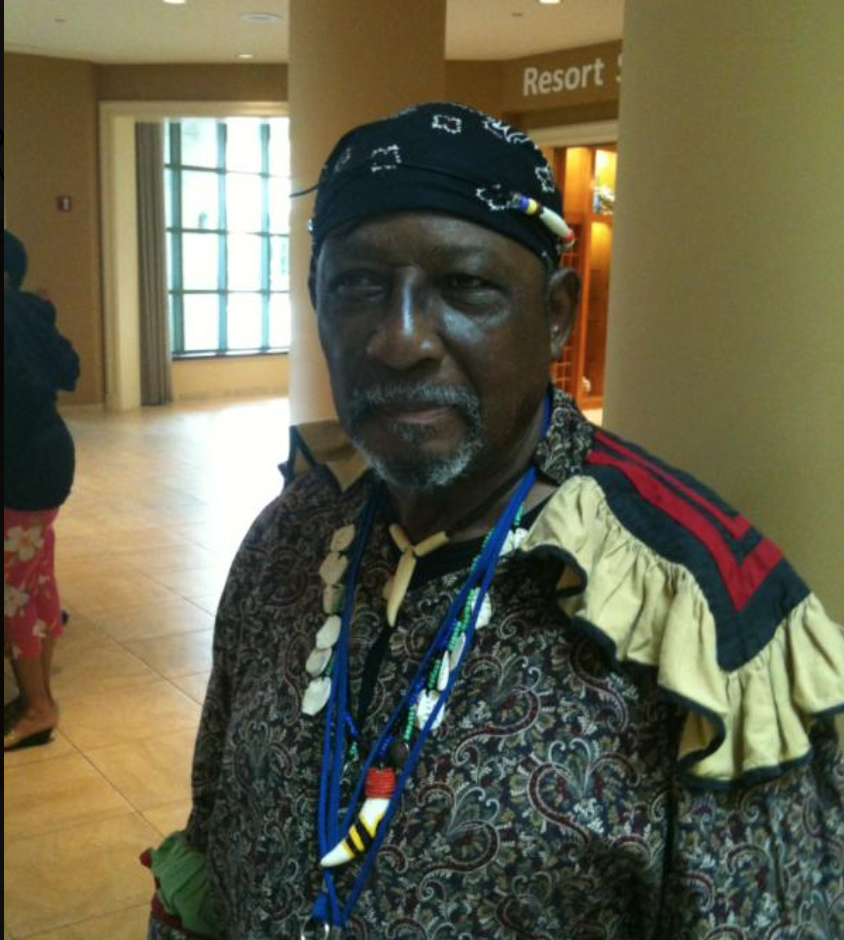
“The old people…would cook a little something and make sure that the neighbor or one of their cousins or somebody had some too.”
William Warrior (will-yum war-ree-yore), President Seminole Negro Indian Scouts

“All the women they would get together and take out the crops… We go from one field to another until we get it done.”
Alice Fay Lozano (ah-liss fay loh-zah-no), storyteller

“For more than 200 years we kept our double African and Indian heritage alive. Our language and our way of life, our songs and dancing… all remind us of our distinctive roots.”
Charles Emily Wilson (char-ells eh-mih-lee will-sun), leader Seminole Scout Association

“This is a creole culture and what it takes is a great ability to adapt and a willingness to do so, and still hold on.”
Natalie Daise (nah-tah-lee dayz), story-teller, artist

“If you can’t hold onto the land, you can’t hold onto the culture.”
Jabari Moketsi (jah-bahr-ee moh-ket-see), publisher Gullah Sentinel newspaper